
Your business might have the best product on the market, but a poor online storefront will send buyers running straight to your competitors. Finding a skilled website design is the fastest way to turn that digital liability into your most profitable asset. A great website design understands exactly how to blend visual appeal with user psychology to keep people clicking. We will explore exactly what these professionals do and how they transform digital spaces. By the end of this guide, you will know exactly how to find the perfect website design for your brand.
Understanding what a website designer actually does is the first step toward building a better online presence. A professional website designer does far more than just pick pretty colors and nice fonts for your pages. Every website designer acts as a digital architect, building intuitive pathways that guide your visitors naturally toward making a purchase or leaving an inquiry. They combine high-quality web design services with technical knowledge to make sure your site actually works. Ultimately, your website designer builds the foundation of your entire digital marketing strategy.
The Core Responsibilities of a Website Designer
Visual architecture forms the baseline of any project a website designer takes on. Your chosen website designer will craft layouts that draw the eye to your most important calls to action. Every good website designer knows that a cluttered page overwhelms users, so they carefully manage white space and visual hierarchy. They provide comprehensive web design services that cover everything from typography selection to custom iconography. This means your website designer ensures your brand identity remains consistent across every single page.
User experience remains the true test of a talented website designer. A dedicated website designer maps out the journey a user takes from the moment they land on your homepage. If a menu is confusing, a smart website designer will restructure the navigation to make finding information effortless. They often collaborate with a freelance web developer to ensure the complex interactive elements function perfectly. Your website designer wants to eliminate friction so your visitors enjoy a seamless browsing experience.
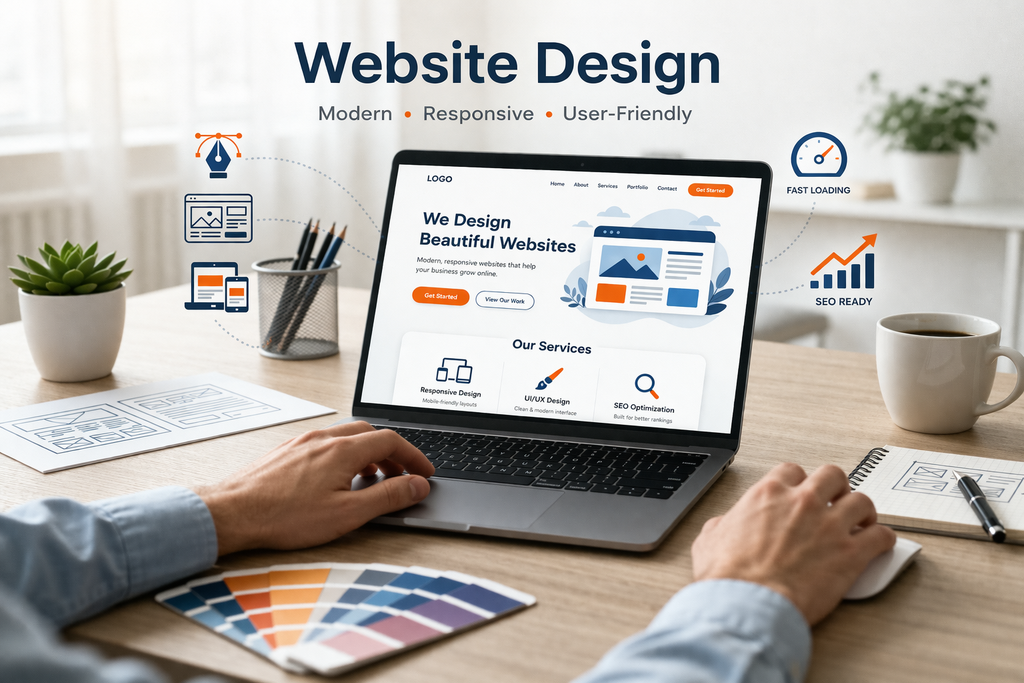
Technical optimization is another crucial area where a modern website designer must excel. Today, a website designer must understand how page loading speeds impact user retention and search rankings. Every expert website designer prioritizes responsive web design so your site looks incredible on smartphones, tablets, and desktop monitors. Without this focus on mobile adaptability, a website designer would fail to serve the majority of modern internet users. This is why a website designer rigorously tests their layouts across multiple devices and browsers.
Why You Need a Professional Website Designer
Many business owners try to use DIY templates before finally admitting they need a professional website designer. While templates look cheap upfront, a professional website designer saves you money in the long run by preventing lost sales. An experienced website designer builds custom solutions tailored specifically to your unique target audience. They offer specialized web design services that generic page builders simply cannot match. Investing in a website designer shows your customers that you take your business seriously.
Building immediate trust is perhaps the biggest benefit of hiring a website designer. When visitors see a custom interface, they instantly recognize the quality work of a premium website designer. A skilled website designer knows how to place trust signals, like testimonials and secure payment icons, in high-visibility areas. Whether you hire an independent contractor or a full web design agency, your website designer will elevate your brand authority. Simply put, a website designer makes your business look like an industry leader.
Boosting conversion rates is the ultimate goal of any strategic website designer. A smart website designer uses data and heatmaps to understand where users click and where they drop off. By analyzing this behavior, your website designer can adjust button placements and streamline checkout processes. They focus on website development elements that actively persuade visitors to subscribe, call, or buy. Your website designer essentially acts as a silent salesperson working around the clock.
The Impact of Responsive Web Design
Mobile traffic dominates the internet, making responsive web design a mandatory skill for any website designer. A forward-thinking website designer ensures your images and text scale perfectly no matter what screen size the visitor uses. If your site breaks on an iPhone, a competent website designer will restructure the grid system to fix the issue immediately. Every website designer understands that Google heavily penalizes sites that fail to provide a good mobile experience. Therefore, your website designer is directly protecting your search engine visibility.
Speed and performance go hand in hand with the mobile layouts created by your website designer. A detail-oriented website designer optimizes image sizes and minimizes bulky code to keep the site lightning fast. When you work with a top website designer, they strip away unnecessary animations that drain mobile batteries and frustrate users. They often partner with a freelance web developer to compress files and leverage browser caching. This careful attention from your website designer keeps bounce rates incredibly low.
Freelance Web Developer vs. Web Design Agency
Deciding between an independent website designer and a larger firm depends entirely on your budget and project scope. A freelance website designer usually offers more personalized communication and flexible working hours. When you hire a solo website design, you know exactly who is working on your site every single day. An independent website design is often more affordable because they carry lower overhead costs. Many small businesses find that a freelance website design fits their immediate needs perfectly.
On the other hand, an agency provides a team of specialists rather than a single website design. In a web design agency, you might have one website design for visuals and another for user experience. While a solo website design wears many hats, an agency divides the labor to speed up massive projects. However, you will pay a premium for a team instead of a single website design. You must evaluate if your project complexity requires an agency or just a highly skilled individual website design.
Collaboration is key regardless of which type of website design you choose to hire. A professional website design will always set clear milestones and ask for your feedback during the drafting phase. Whether they are an agency employee or a freelance website design, they need your industry expertise to shape the content. Your website design will merge your brand knowledge with their digital marketing skills. This synergy helps your website design build something truly exceptional.
Key Services Offered by a Website Designer
A comprehensive website design does much more than just sketch out attractive homepage mockups. Your website design will typically start with wireframing, which is essentially a digital blueprint of your new site. This planning phase allows the website design to organize your content logically before adding any colors or images. High-quality web design services always include this crucial structural step to prevent costly revisions later. Your website design wants to ensure the skeleton of the site makes sense first.
Search engine optimization is another critical service provided by a modern website design. An educated website design structures their heading tags and meta descriptions to help search engines understand your content. While they are not always SEO specialists, a good website design lays a foundation that search spiders can easily crawl. They handle the technical website development aspects that make your pages indexable and fast. Your website design ensures your beautiful site can actually be found by potential customers.
Ongoing maintenance is a service you should actively discuss with your chosen website design. The digital landscape changes rapidly, so a responsible website design will offer packages to keep your plugins and software updated. If a link breaks or a form stops working, your website design can jump in to fix the issue quickly. Many people forget that a website design is essential for long-term security and functional health. Retaining your website design after launch gives you peace of mind.
How to Choose the Right Website Designer for Your Business
Finding the perfect website design requires a bit of research and a clear understanding of your own goals. Start by looking at the portfolio of any website design you are considering for the job. A diverse portfolio proves the website design can adapt their style to fit different brand personalities rather than using one generic template. You want a website design who has successfully completed projects in your specific industry or a closely related field. Evaluating past work is the best way to gauge a website design and their actual capabilities.
Communication skills are just as important as the coding abilities of your website design. A reliable website design will explain their process clearly without hiding behind confusing technical jargon. If a website design takes days to reply to your initial inquiry, they will likely be slow during the project too. Look for a website design who asks thoughtful questions about your target audience and your business objectives. A great website design listens more than they speak during the initial consultation.
Always check client testimonials before signing a contract with a new website design. Reviews will tell you if the website design respects deadlines and stays within the agreed-upon budget. You can even reach out to past clients to ask how the website design handled feedback and revisions. An honest website design will gladly provide references to back up their claims of excellence. Your chosen website design should have a proven track record of happy, profitable clients.
Questions to Ask Before Hiring
Interviewing a website design should feel like interviewing a key business partner. Ask the website design how they approach responsive web design to ensure they prioritize mobile users. You should also ask the website design if they build custom sites or if they rely on pre-made themes. Finding out if the website design includes post-launch support in their contract will save you future headaches. A transparent website design will answer all these questions confidently and provide written terms.
The Future of Website Development
The tools available to a modern website design are evolving at a staggering pace. Today, a website design can leverage artificial intelligence to generate layout ideas and analyze user data faster than ever before. However, AI cannot replace the human empathy that a skilled website design brings to a project. A real website design understands emotional triggers and cultural nuances that machines completely miss. The role of the website design is shifting from manual coding to strategic digital consulting.
Immersive technologies are also changing how a website design approaches a blank canvas. A forward-thinking website design is already learning how to incorporate 3D elements and augmented reality into their layouts. As internet speeds increase, your website design will have more freedom to create interactive, video-heavy experiences without lagging. Every dedicated website design constantly studies these trends to keep their clients ahead of the curve. Your website design is your guide to the future of digital commerce.
Accessibility is becoming a major legal and moral focus for every responsible website design. A modern website design must ensure their sites can be easily navigated by people using screen readers or voice commands. They implement specific web design services that adjust color contrasts and provide alternative text for images. An inclusive website design opens your business up to a much wider audience. Ultimately, an ethical website design builds the web to be a welcoming space for everyone.
Next Steps for Upgrading Your Digital Presence
Now that you understand the immense value a website design provides, it is time to take action. Start by auditing your current site and writing down specific areas where a website design could improve the user journey. Once you have a clear list of goals, begin reaching out to a freelance web developer or a web design agency for proposals. Remember to prioritize finding a website design who understands your specific industry challenges. Hiring the right website design is a direct investment in the future growth of your business.