
Understanding the Dynamic Website Cost is essential for businesses planning to build a scalable and feature-rich online presence. The choice between static and dynamic websites significantly impacts functionality, performance, and long-term investment.
A Dynamic Website Cost is generally higher than a static site because it includes advanced features like user accounts, databases, real-time updates, and e-commerce capabilities. However, the flexibility and scalability make it a worthwhile investment for growing businesses.
What Affects Dynamic Website Cost?
Several factors influence the overall including:
- Design complexity
- Development requirements
- Hosting infrastructure
- Maintenance and updates
- Third-party integrations
Understanding these elements helps businesses plan their more effectively and avoid unexpected expenses.
Design and Dynamic Website Cost
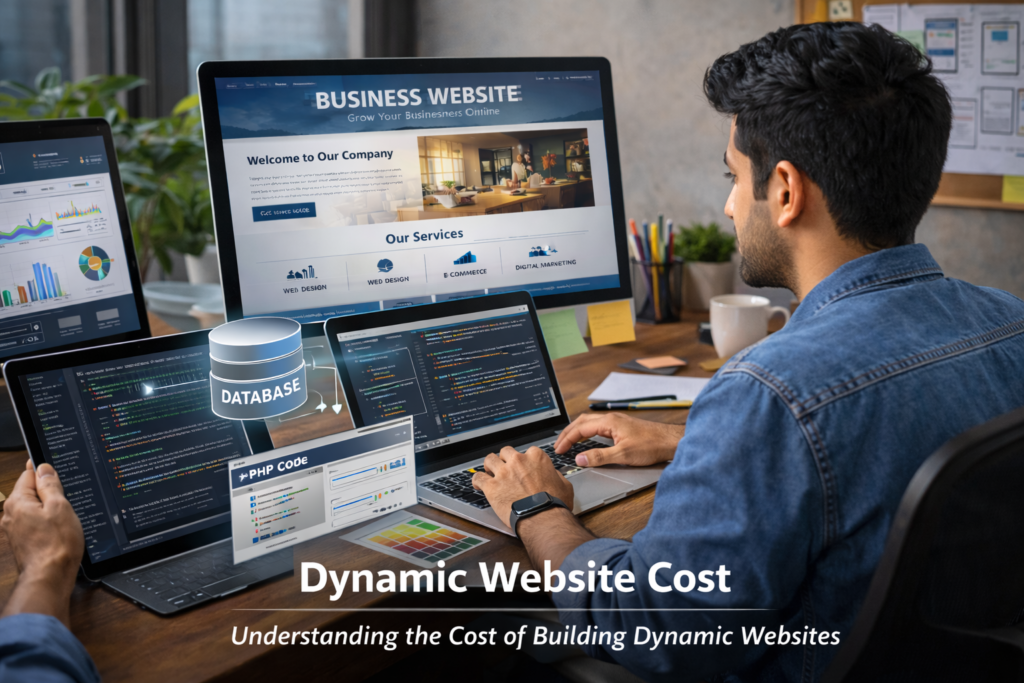
The design phase plays a major role in determining. Dynamic websites use a combination of technologies such as:
- Server-side languages (PHP, Python)
- Databases (MySQL)
- Client-side scripting (JavaScript)
This “tech stack” increases compared to simple static websites.
Unlike static pages, dynamic websites deliver personalized content based on user behavior, location, or preferences. This level of customization adds value but also increases.
Modern technologies like JAMstack and headless CMS platforms have helped reduce, making dynamic websites more accessible even for small businesses.
Development and Dynamic Website Cost
Development is another critical factor influencing. Building a dynamic website involves:
- Backend programming
- Database integration
- API connections
- Custom functionalities
All these elements contribute to a higher Dynamic Website Cost.
However, businesses can reduce the Dynamic Website Cost by:
- Using pre-built themes
- Leveraging existing plugins
- Avoiding unnecessary custom features
For example, using platforms like WordPress can significantly lower compared to fully custom-built solutions.
Hosting and Dynamic Website Cost
Hosting plays a crucial role in determining. Since dynamic websites process data in real time, they require:
- Powerful servers
- Database management systems
- High-performance hosting
This increases the monthly compared to static hosting.
Choosing the right hosting provider can optimize. Look for features such as:
- CDN support
- Caching tools
- Security protection
- Scalability options
These features ensure better performance while controlling.
Maintenance and Dynamic Website Cost
Maintenance is an ongoing factor. Dynamic websites require regular updates to:
- CMS platforms
- Plugins and integrations
- Security systems
- Database optimization
Ignoring maintenance can increase in the long run due to downtime or security issues.
A well-maintained website helps reduce unexpected expenses and ensures that your remains manageable over time.
Dynamic vs Static Website Cost
When comparing static and dynamic websites, is usually higher due to advanced functionality.
Static Websites:
- Lower initial cost
- Minimal maintenance
- Faster loading
- Limited features
Dynamic Websites:
- Higher Dynamic Website Cost
- Scalable and flexible
- Personalized user experience
- Supports e-commerce and user accounts
Despite the higher, dynamic websites are ideal for businesses that require frequent updates and user interaction.
How to Reduce Dynamic Website Cost
Businesses can optimize their by following smart strategies:
- Prioritize essential features
- Use CMS platforms like WordPress
- Avoid unnecessary custom development
- Choose scalable hosting plans
- Use existing plugins instead of building from scratch
These steps can significantly lower without compromising quality.
E-commerce and Dynamic Website Cost
Adding e-commerce functionality can increase by 30–100%, depending on complexity.
Features that impact the include:
- Payment gateways
- Product management systems
- User accounts
- Security protocols
Using platforms like WooCommerce can help reduce the while still providing powerful e-commerce capabilities.
Long-Term Value of Dynamic Website Cost
While the initial may seem high, it provides long-term benefits such as:
- Better scalability
- Improved user engagement
- Higher conversion rates
- Advanced analytics
Investing in a dynamic website ensures that your business can grow without needing frequent redesigns, making the smart long-term investment.
Final Thoughts
The Dynamic Website Cost depends on multiple factors including design, development, hosting, and maintenance. While it may require a higher initial investment compared to static websites, the benefits of flexibility, scalability, and advanced functionality make it worthwhile.
By planning carefully and choosing the right technologies, businesses can manage their effectively while building a powerful online presence.