The iOS App Development Company The Reasons Why a Right Partner can transform an Idea into the most valuable asset of an Enterprise
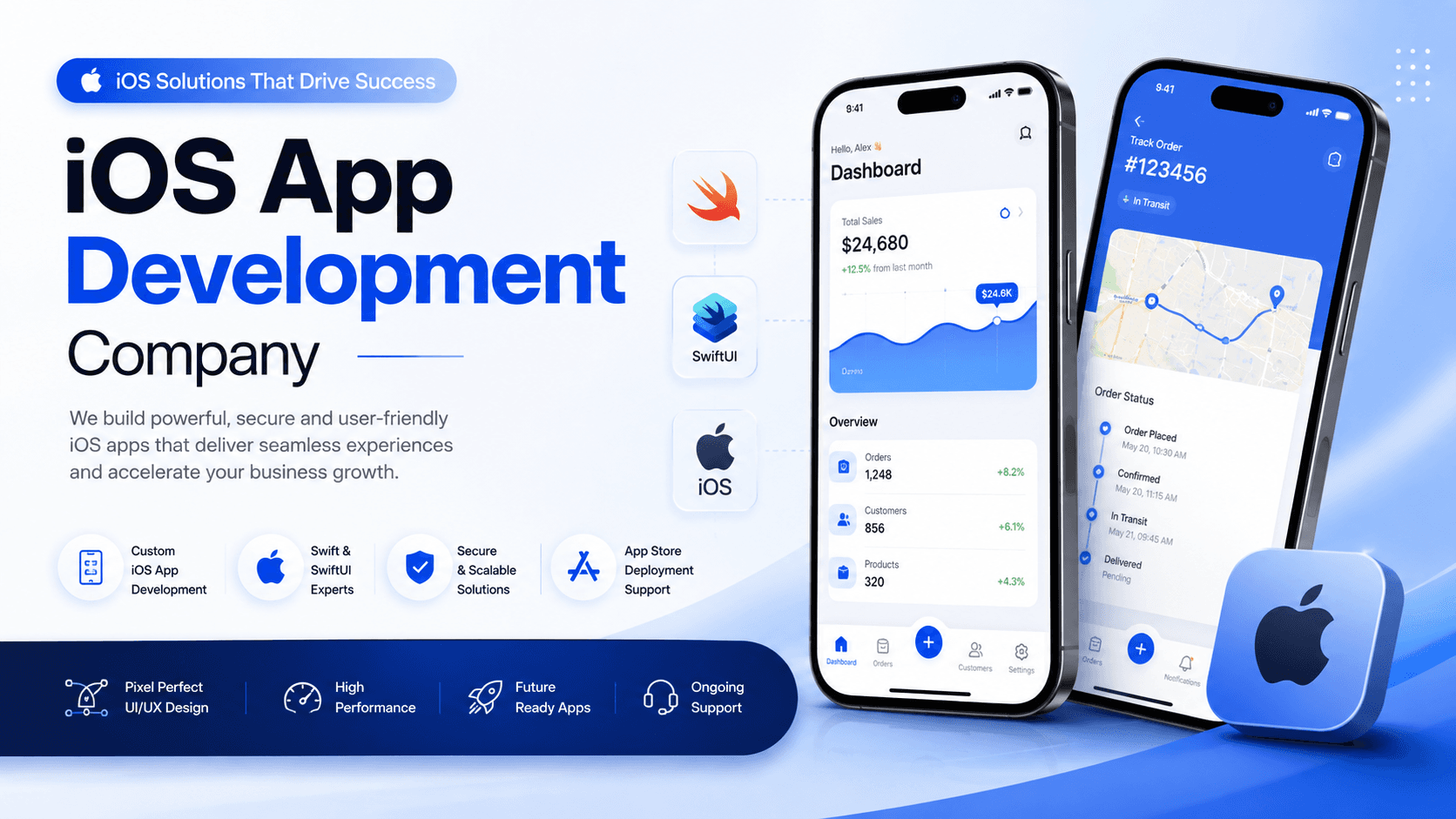
We build fast, reliable iPhone and iPad apps that help businesses grow on Apple's platform. Our skilled developers follow a proven process to deliver polished results on time. Whether you're launching a new idea or expanding your mobile presence, we turn your vision into apps users love.
There's a place, at this moment the founder of a company is sketching the idea of a brand new app on napkins. The owner of a shop wants to improve their efficiency by creating an app that allows customers to order a new item at the touch of an icon. Startups are planning to have the app appearing on thousands of homes screens. To all these hopefuls their biggest hurdle will likely be facing the company that develops apps which they work with.
The end of the day, establishing a company involves a great deal of planning and thought, such as choosing the right iOS company to develop apps is similar to selecting an architect to design your home because you intend to stay there the remainder of your existence. Make the right choice, and your application will become something that develops along with your company's needs and improves the experience for the people who use it, and also provides the best return for your investment, year on year. Choose poorly and not only will you need to contend with glitches and crashes, you'll also be losing money.
There's a lot more to working with an iOS application development firm other than simply creating apps. We'll look at the nuanced elements of working with a partner and learn how you can benefit from it. Apple App Store rewards the businesses that adhere to their highest methods. Learn how to identify a partner who shares the vision you have for the perfect iOS app.
The Complexities Behind iOS App Development
A solid iOS company for development integrates various disciplines. Designers appreciate the flexibility of thumb. Engineers create codes that are both quick and efficient. Product strategists who consider the implications regarding the target audience's engagement prior to even a single line is created. Quality assessors who look at intentionally broken code positively. and project managers who make sure that the process is always fluid so that the person using the process is not in the tense stage.
The top companies aren't content to accept orders. They scrutinize ideas which do not benefit customers. They're the ones who keep in mind the features that you in the rush had neglected. They also have the ability to imagine the future scenario after the time of launch within about six months. For a summary, they offer the relationship with outcomes having a shared responsibility, rather than an individual vendor that has been given money to sign an invoice.
The distinction between the two is what decides whether or not an application is successful of a program.
The Apple Ecosystem: A Garden Worth Tending
Apple's delivery policy is extremely strict and strict, which is just one reason why designing to support iOS is an excellent investment.
One of the Apple's corporate philosophies is maintaining App Store as an App Store to be a carefully tended landscape, as opposed to an unclean field. The rules are set by Apple in regards to privacy, quality as well as design. Though some developers have complained about the strictness, the smart businesses support the idea. The trust created over the years through Apple makes users feel secure when doing business, which includes download, the payment and sharing of their data.
The iOS Ecosystem and Its Advantages
One of the strengths that is unique to iOS is the consistency. Since Apple manages both its hardware and software, a competent team is able to provide a seamless experience that works across iPhone, iPad, Apple Watch as well as other. The features are connected. Users can begin an activity on their iPhone and finish it with their iPad in a matter of minutes with no hassle.
A reputable iOS application development firm is able to recognize and make use of these features. The apps they create can be integrated with the entire ecosystem and make use of the tools provided on the platform in order to improve the experience of users by incorporating Face ID, Apple Pay Push Notifications, Face ID, as well as Siri connection into their applications in more sophisticated ways in the app instead of being ineffectively integrated features.
Users Who Spend
The business owners are thrilled by this information: iOS users tend to invest more in apps as well as more in general than other platforms. It doesn't mean those who use other platforms should be overlooked. An excellent iOS application targets a market who is conditioned to purchase or subscribe and become the most loyal customer. That, for many organizations is the reason for paying for the application.
User Experience: Invisible Creativity That Shapes Your Decisions
Think of the app that you uninstalled. Perhaps it was slow in reaction time. Perhaps the buttons are small. You might not be able accomplish the project you had originally planned to accomplish. Most likely, you didn't return to the application after this encounter.
This is why poorly constructed software is geared to fail. The best user experience has often not noticed.
The users have come to expect Apple applications to be seamless and easy to use. If you don't meet those expectations, you'll end up with the impression that an application is odd for users, and even those who are unable to explain the reason why they feel it's wrong. Making great applications is much more than just a listing of functions. The little things that feel good are often more crucial.
Designing for Clumsy Thumbs
The guidelines for mobile design differ from the guidelines for desktop design. Fingers don't have the same precision like cursors. Phones are used by one hand while moving or in bright sunshine or with fatigued eyes. Designers have thought about placing key buttons at a convenient location. A great design includes clear texts and functions that aid exhausted users find their way around at 3:00 am.
Design as a Discipline
While it isn't easy as it could be to resist the desire to include more features, good design keeps the discipline. Every stakeholder has their personal "wouldn't it be cool to add" notion. Excellent iOS designers help their clients invent by focusing and discipline. Three well-designed features will outdo twenty poorly implemented options.
From Napkin to the App Store
An organized, efficient method is the key to distinguish between an established iOS developing team versus an unprofessional one. Understanding the lifecycle of development will help the client understand the expectations to anticipate as well as, perhaps knowing what not to do.
Discovery: Asking the Right Questions First
The process of creating a screen requires lots of discussion prior to the creation. What's the audience for it? What problem do they face? What is success? In terms of not being subjective? With the numbers? Which competitors tackle the issue and what do they miss? make a mistake?
For patent creators, this can be an expense to skip this step. If you skip this step and you don't, you'll end up paying the price at the end. Clarifying your goals is an efficient time-saver. In every hour of in goal clarification, ten hours of costly rework are eliminated. An experienced partner should insist on this stage in order to prevent costly rework later.
Design and Prototyping: Seeing Before Building
This is when design and structure is established. Diagrams and wireframes are transformed into detailed sketches and click prototypes. The process of creating an app transforms from a concept that is abstract to the actual image.
This stage offers a huge degree of freedom and flexibility, as well as an opportunity to alter your thoughts. It is also the time when you'll be able to evaluate the design's flow, gather feedback. You can also tackle the "awkward moments" of a plan. This is a crucial step as most companies view it as one of the "rehearsal" before they spend the money to develop code.
Development: Where Craft Meets Code
The final stage of the design process involves the actual construction. The designs are transformed to software by using code and frameworks. The best developers are concerned about the structure of their code and the way it's easy to work upon.
As we're talking about apps in this article, let me make it clear that displaying the progress of the users (for my application) signifies showing them the application grow(ship) each step by step. The app allows users to give feedback at various places throughout the app design process. This helps avoid that lengthy, frustrating waiting time to the final stage.
Breaking It Before Users Do
The quality of the app is evaluated by observing the extent to which a company has broken the app it has developed prior to release. Tests are conducted on a variety of mobile devices as well as iOS to discover bugs and crashes. It is the goal to give the user most minimal issues with the app to provide an optimal user experience.
If you don't have checked your brakes, it is not a safe vehicle to market. A mobile application that isn't tested is a violation of the good design.
Clearing the App Store Gate
Apple is quite clear on the features they would like to see in their App Store. Design is only one aspect of a variety of considerations regarding privacy and performance as well as user experience and more. The best iOS application development firm will develop a solid, well assessed application that has been praised by the public.
Launch Day is a celebration as well as the beginning of a lengthy purchase process for users.
Beyond Launch: The Part Everyone Forgets
Apps are launched but it's only the start. Technology advances continue. Apple launches new software and hardware. The users have fresh ideas for the features of apps. Bugs are able to sneak to your application. An alliance with you beyond launch will help to keep your app updated, secure and in line with the latest features available from Apple. Before signing any contract make sure you ask the app developer company for the post-launch partnerships they have with them. If they don't show much interest in responding, you might think they're just interested in a single-time agreement.
High-Quality Engineering Makes the Difference
There are many potential clients who want to select a quote by cost. But when you are creating an application, cost doesn't necessarily reflect high-end quality. Engineering is the foundation of all applications.
Optimal Design Leads to Optimal Results
Imagine wiring inside an apartment. It's not obvious that the wiring is there however, you'll see that if it's wired badly, fire could be too far away. Clear code can make things simpler and more cost-effective to come back to in the near future. If code isn't designed with care, the cost of making changes or add new features is huge.
Performance is Noticeable, and Vital
Nobody wants an application that is slow. The quality engineers consider an application when its number of users increases from a few hundred to a large number. The app that doesn't perform well only for a few users won't be able to function efficiently for larger groups.
Security and Trust
There's plenty of risks when it comes to storing a person's personal details. Customers are trusting your company, and you must protect this trust with reliable techniques for engineering. Since privacy is one of the major selling points of iOS and its users, bad practice in security issues on iOS can be disastrous for a business. Existing businesses may view insufficient security practices as a major reason to not buy.
Building Trust Through Social Proof
A partnership contract with any firm involves some aspect of trust falling which is why smart companies won't do it without tracing some evidence. In the process of deciding on the best developer partner it's the track record they're most interested in.
Portfolios that prove the point
An impressive portfolio shows a broad range of expertise and provides an element of polish in the overall design and user experience. It is essential to dump on a few of their partners' digital apps to test the performance and to determine if there was any thinking behind the app's conception and creation.
Stories and Case Studies containing the intention of
Very rarely do testimonials that are vague give insight into the the actual results of work. Case studies that are of the highest quality extend beyond the process of development into a conclusion and hypothesis. Most convincing testimonials provide details of App features, and explain how they helped to create new business flow or increased key metrics, such as call and support ticket. Customers who are genuine should be happy to support public case studies. Reviews without a name or the company's name are useless.
App Store Ratings and Reviews
Ratings from the public on a company's created apps provide an honest feedback. The fact that users take the time to leave a review that has scores that are high indicates that they are able to create apps that have a large audience that will appreciate.
What Makes a Good Team Partner
Make your own decisions in forming a team. There are many factors to consider over resumes and qualifications. The person you work with will be in the team for a long time. This is the time to need to consider the dynamic.
In the beginning, look at the ways in which your team interacts. Do they listen well and are thoughtful? Are they prone to oversell or speak using jargon, or do they make things simpler ? What is their response rate and how fast are they able to fulfill their promises during the selling process? The way companies interact with you prior to you make a purchase determines what the relation will be in the end.
It is important to find a partner who is interested in what the company's purpose is instead of only the specifics of your application. A good partner will think of your clients, revenues, as well as your long-term goals. They are loyal to the app as they know it's a lot beyond.
If you are thinking about how long the partnership is expected to last you should think about teams that have the capacity to develop beyond just a single initiative. Look for teams who have an interest in the bigger image of your organization and are aware of the value of the app.
Why Develop an iOS App
Think about the benefits over time. A well-designed app could bring in thousands customers, and also automate your processes. In fact, it is a highly productive tool that doesn't limit the time you have available.
It improves loyalty of customers because it gives them an immediate connection with you that they are able to access at any time and from anywhere. Additionally, it can increase revenue via subscriptions, purchases or simply more engagement with customers. The system also gathers information about the behavior of consumers that could be linked to the use of products. In addition, it gives the impression that your company is reliable, trustworthy and valuable.
It requires a skilled team that can make a variety possible choices, many of which won't be visible to your users. The "craft" is what makes your application stand out from the crowd.
Turning an Idea Into Reality
The app you have in mind and your desire to get your customers with their phones or the thought "wouldn't it be great if?" Your ideas are waiting to be formulated.
An excellent iOS App development company divides their services into craft strategies, and partnerships. They know how to build your application within the Apple ecosystem and, most important, within the Apple user base. They are convinced of the value of user-generated experiences, and will make multi-year decisions to bring an actual worth.
Pick your partner carefully. Choose a partner who will help develop your business, one thought-provoking step at a time.
The idea you have in mind deserves this kind of commitment. Make yourself ready for your next steps.